What Is a 358 High-Security Fence? Mesh Size, Anti-Climb Design, Cutting Resistance & Applications
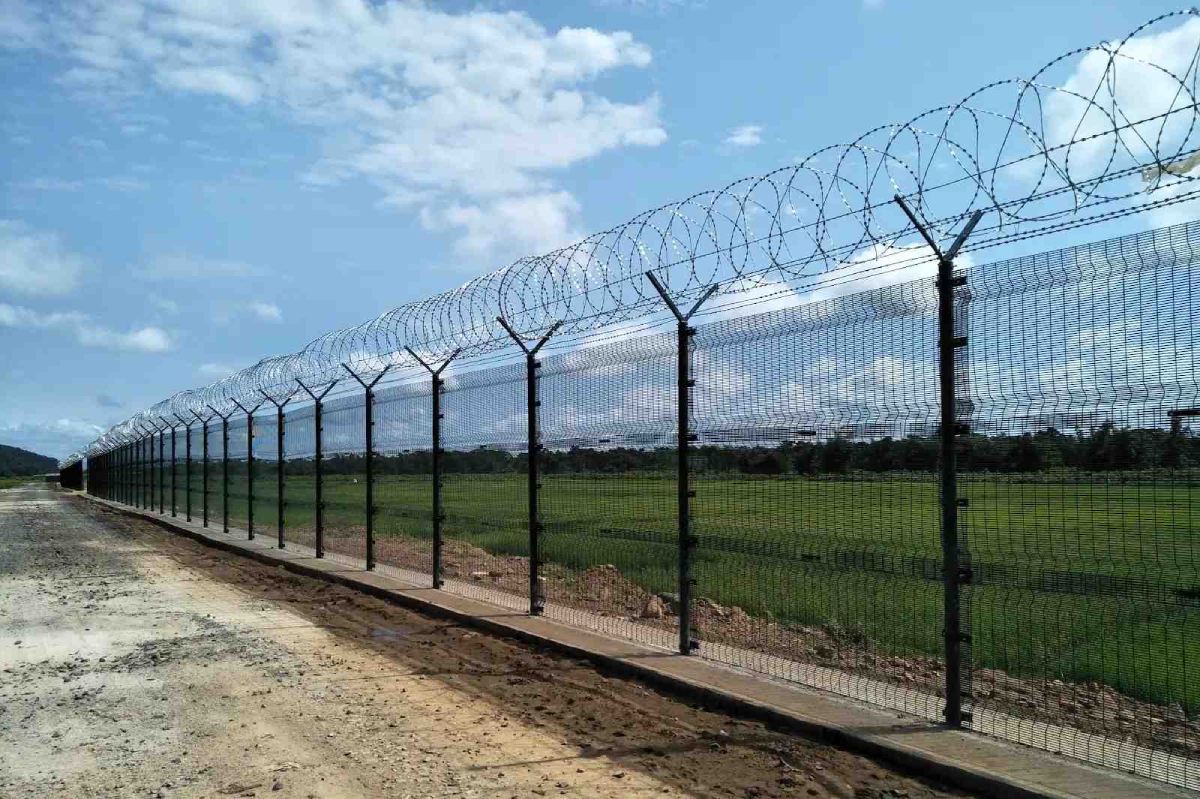
A 358 high security fence is a welded mesh security fence designed to make climbing and forced entry significantly more difficult while maintaining visibility across the perimeter. Its name comes from its nominal mesh opening of 3 inches × 0.5 inches, or approximately 76.2 mm × 12.7 mm.
Unlike conventional fencing, where larger openings can provide footholds, handholds, or enough access for cutting tools, a 358 mesh fence uses tightly spaced horizontal and vertical wires to create a narrow, rigid barrier. The result is a security-focused fence configuration used for facilities where perimeter protection, surveillance visibility, and intrusion delay are important design requirements.
A1 Americas uses this configuration in its ArmorMesh Level IV high-security fencing system, which is engineered and tested in accordance with ASTM F2781-15 and designed to provide measurable intrusion delay against aggressive cutting tools.
What Does “358” Mean in a Security Fence?
The term 358 describes the approximate dimensions of the welded mesh openings:
- 76.2 mm (3 inches) horizontally
- 12.7 mm (0.5 inches) vertically
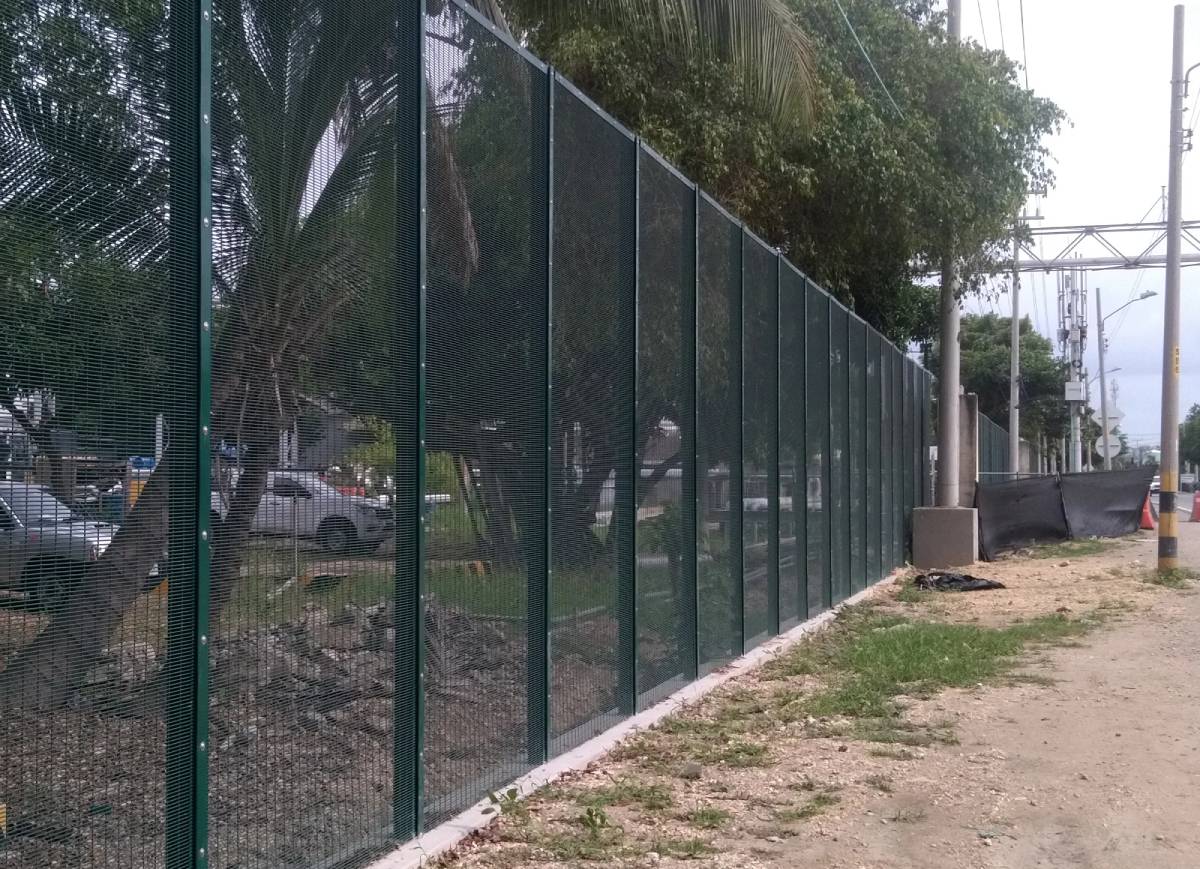
The narrow vertical opening is the defining feature. It creates a close lattice that limits the ability of an intruder to obtain a useful foothold or grip on the panel.
This is why a 358 fence is often referred to as an anti-climb 358 fence or a high-security welded mesh fence. The security performance does not come simply from the fact that the fence is made from steel. The mesh geometry, wire construction, panel rigidity, fixing system, and overall fence design all contribute to the barrier's performance.
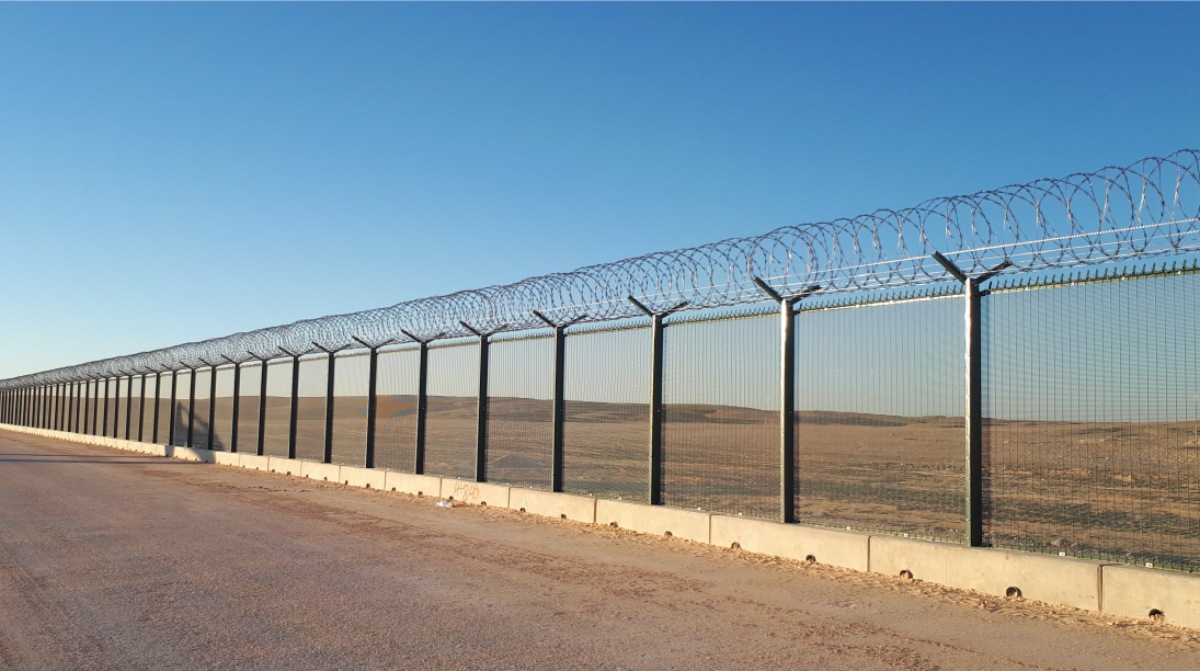
A1 ArmorMesh Level IV uses high-strength welded wire panels, reinforced structural framing, and anti-tamper fastening methods as part of its 358 high-security fence system. A high security mesh fence with an anti climb 358 fence design provides restricted footholds while maintaining visibility and structural strength.
Why Does the Small Mesh Aperture Matter?
Mesh size directly affects how a person can interact with a fence.
A conventional fence with larger openings may provide opportunities to:
- place a foot against the mesh,
- grip the wire,
- insert tools through an opening,
- gain leverage against the panel, or
- manipulate components from outside the perimeter.
The narrow openings of a 358 mesh fence reduce these opportunities. The geometry is particularly important for climbing resistance. There is little usable space for a person to establish the footholds and handholds normally required to scale a fence. A1's ArmorMesh anti-climb systems use tightly spaced mesh apertures specifically to remove these grip points while retaining open sightlines for surveillance.
This does not mean that a 358 fence is impossible to breach. Security fencing should be specified according to the threat, required delay, site conditions, and other perimeter layers. The objective is to make unauthorized access more difficult and time-consuming while giving detection and response systems more time to act.
An anti climb 358 fence supports effective security mesh fencing by combining narrow apertures with rigid construction and clear surveillance sightlines.
How Does 358 Welded Mesh Resist Cutting?
Climbing is only one part of a perimeter threat. Cutting resistance is another major reason 358 welded mesh is used in high-security applications. The closely spaced wires create a greater number of individual cutting points than a fence with large mesh openings. The limited aperture also restricts access and working space for cutting tools.
The overall performance depends on more than mesh size. Procurement teams should consider:
- wire construction
- welded intersections
- panel configuration
- structural framing
- fixing methods
- security toppings
- required intrusion delay
- the applicable test or certification
A1 ArmorMesh Level IV combines high-strength welded wire panels with reinforced structural framing and anti-tamper fastening methods. The system is tested in accordance with ASTM F2781-15 and is designed to provide measured resistance against aggressive cutting tools.
A1 reports more than six minutes of resistance against advanced cutting tools for the ArmorMesh Level IV system. That delay is significant because perimeter security is not only about preventing entry; it is also about creating time for security personnel and electronic systems to detect, assess, and respond to an attempted breach.
A high security mesh fence should be evaluated with its complete construction, while an experienced 358 fence manufacturer can provide relevant technical documentation and testing evidence.
Anti-Climb Design and Perimeter Visibility
A common concern with high security fencing is that increasing physical protection can reduce visibility. A solid wall may provide a substantial physical barrier, but it can also create blind areas for cameras and patrol teams. A welded mesh security fence takes a different approach.
The open construction of security mesh fencing allows cameras and security personnel to maintain visibility through the perimeter. This is particularly useful where the fence needs to function alongside CCTV, lighting, and fence intrusion detection. A1 reports a 41.33% Visibility Index for ArmorMesh Level IV, allowing the fence line to remain visible to surveillance systems and patrol teams.
For a high-security facility, this combination matters:
Physical barrier + visibility + detection + response
The fence is therefore part of the wider perimeter security system rather than a standalone security measure.
Panel Rigidity, Posts and Fixings Matter
A common mistake when specifying a 358 security fence is to focus only on the mesh aperture. The panel is one component of the system. Its performance also depends on how it is supported and secured.
A high-security installation should be evaluated as a complete assembly, including:
- mesh panels
- posts
- structural framing
- panel-to-post connections
- foundations
- fasteners
- gates and access points
- fence height
- security toppings
- site-specific environmental requirements
A rigid welded panel supported by an appropriately engineered structure behaves differently from a lightweight mesh attached to conventional posts.
The fixing system is also important. A1 ArmorMesh systems use tamper-resistant fastening approaches. In its anti-climb systems, A1 specifies breakaway nuts that shear during installation to make unauthorized panel removal more difficult.
For critical sites, procurement should therefore evaluate the entire fence system, not simply the mesh pattern printed on a product specification.
Where Is 358 High-Security Fence Used?
A 358 high security fencing system is generally considered where the perimeter needs stronger anti-climb and forced-entry resistance than conventional fencing can provide.
Typical applications include:
Data Centers
Data centers require controlled physical access around critical infrastructure. A delay-rated 358 fence can provide a difficult-to-climb physical perimeter while maintaining visibility for surveillance systems.
Power Generation and Transmission Sites
Utility and energy facilities may require perimeter systems capable of resisting determined intrusion while integrating with additional detection and deterrence measures.
Government and Critical Infrastructure
Government facilities and other strategic sites may require high-security perimeter fencing with controlled access, intrusion delay, and surveillance visibility.
Airports and Aviation Security Zones
Airside and restricted areas can benefit from a rigid welded mesh perimeter where visibility and controlled access are important.
Military, Defense and High-Risk Facilities
Where the consequences of unauthorized access are significant, 358 high security fencing can form part of a layered perimeter security design.
A1 identifies data centers, power generation and transmission sites, military and defense installations, airports, border security and critical government facilities among the applications for its ArmorMesh Level IV system.
358 Fence vs Conventional Welded Mesh
The key difference is the mesh geometry and security objective.
| Feature | 358 High-Security Fence | Conventional Welded Mesh |
|---|---|---|
| Mesh opening | Approximately 76.2 × 12.7 mm | Typically larger |
| Climbing resistance | High due to narrow aperture | Depends on mesh configuration |
| Tool access | Restricted by small openings | Generally easier with larger openings |
| Visibility | Open mesh maintains sightlines | Varies by design |
| Security application | High-security and critical sites | General, commercial and perimeter applications |
| Intrusion delay | Can be designed/tested for defined resistance | Depends on system |
| Tamper resistance | Security-focused systems can use specialized fixings | Depends on construction |
The correct choice depends on the facility's risk profile rather than the name of the fence.
358 Fence vs Chain Link
Anti-climb welded wire mesh is widely used because it is economical, flexible, and suitable for many conventional perimeter applications. However, chain link and 358 fencing serve different security requirements.
A chain-link fence generally has larger openings and a flexible woven construction. A 358 mesh fence uses tightly spaced welded wires and a rigid panel configuration.
For a facility where anti-climb performance, cutting resistance, surveillance visibility, and intrusion delay are important, 358 security fencing can provide a stronger security-oriented design.
Chain link may remain appropriate for lower-risk applications where the primary requirements are boundary definition, access control, or general site security.
358 Fence vs Palisade Fencing
Palisade fencing uses vertical steel pales to create a rigid perimeter and provides a strong visual deterrent. A 358 fence takes a different approach by combining a tightly spaced welded mesh with an open configuration. The choice depends on the site.
Palisade may be appropriate where a strong visual deterrent and rigid steel boundary are priorities. A 358 welded mesh system can be advantageous where anti-climb performance and continuous visibility through the perimeter are important.
Neither should automatically be considered the better option. The appropriate system depends on the threat model, required security performance, aesthetics, site conditions, and integration requirements.
What Should Procurement Teams Specify?
When purchasing a 358 fence, the mesh size is only the starting point.
Procurement and security teams should request information covering:
- Mesh aperture — confirm the actual horizontal and vertical opening.
- Wire construction — identify the material and relevant strength characteristics.
- Panel construction — understand how the welded panels are manufactured and supported.
- Posts and structural framing — review the complete structural assembly.
- Fixings — specify tamper-resistant or security fastening where required.
- Testing and certification — identify the applicable security standard and test evidence.
- Intrusion delay — understand what tools and test conditions the stated delay represents.
- Corrosion protection — confirm galvanization and coating specifications.
- Visibility — consider CCTV and patrol requirements.
- Security integration — determine whether razor wire, wall spikes, PIDS, gates, or other layers are required.
For projects requiring documented forced-entry performance, procurement teams should request the applicable test reports, certification, and engineering documentation rather than relying solely on the term "high security."
Choosing a 358 Fence Manufacturer
A 358 fence manufacturer should be evaluated on more than the ability to supply welded mesh panels. For high-security projects, the manufacturer should be able to provide appropriate technical documentation, drawings, system specifications, structural information, and guidance on how the fence integrates with other perimeter security components.
A1 Americas manufactures and supplies engineered perimeter security systems across the United States, combining local manufacturing, engineering insight, and project-specific configuration. Its ArmorMesh Level IV system is designed around the 358 high-security fencing configuration and can be integrated with security toppings such as concertina razor wire and wall spikes.
Is a 358 High-Security Fence Right for Your Facility?
A 358 high security fence should not be selected simply because it is marketed as a high-security product. The better question is what the perimeter needs to accomplish. If the site requires a rigid welded mesh barrier that limits climbing opportunities, restricts tool access, maintains surveillance visibility, and can provide measurable intrusion delay, a 358 security fence may be an appropriate starting point.
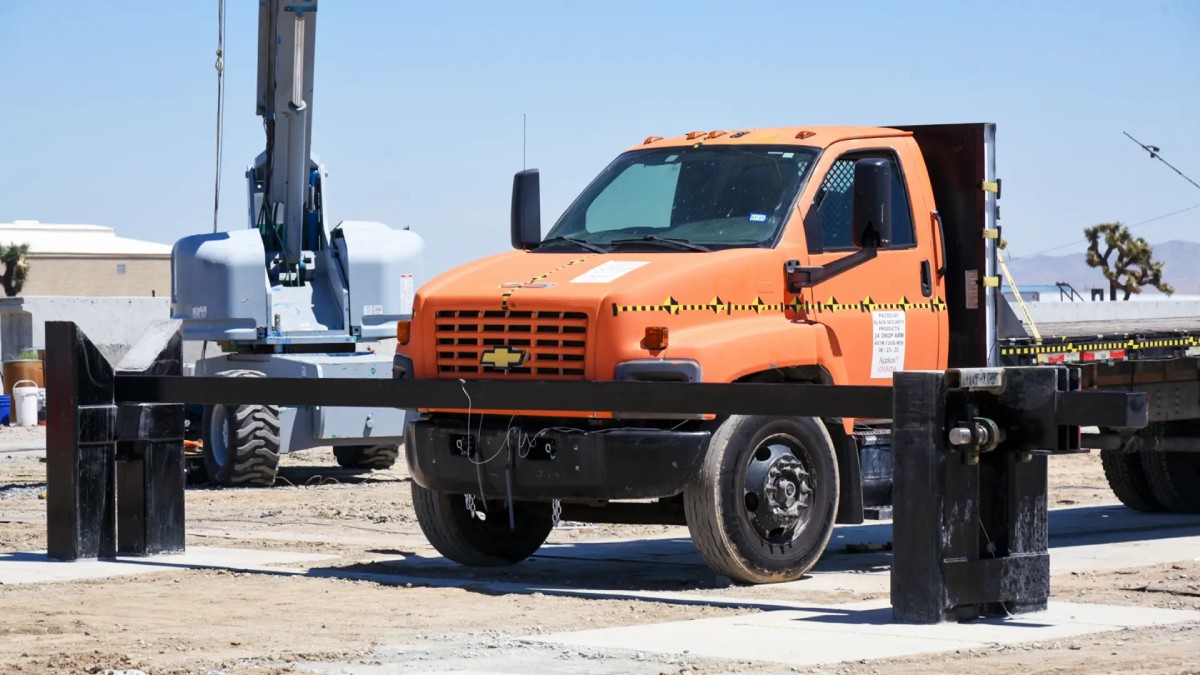
For higher-risk facilities, the fence should then be considered as one part of a layered perimeter security system that can include intrusion detection, CCTV, access control, razor wire, wall spikes, and vehicle protection.
A1 ArmorMesh Level IV is designed around this approach, combining 358 welded mesh, reinforced structural framing, anti-tamper fastening, and tested intrusion-delay performance with options for additional perimeter security layers.
The strongest perimeter is not defined by the mesh size alone. It is defined by how the fence, structure, detection, access control, and response strategy work together against the risks specific to the site.